Tax Return Document Checklist: Which Documents You Actually Need (Germany)
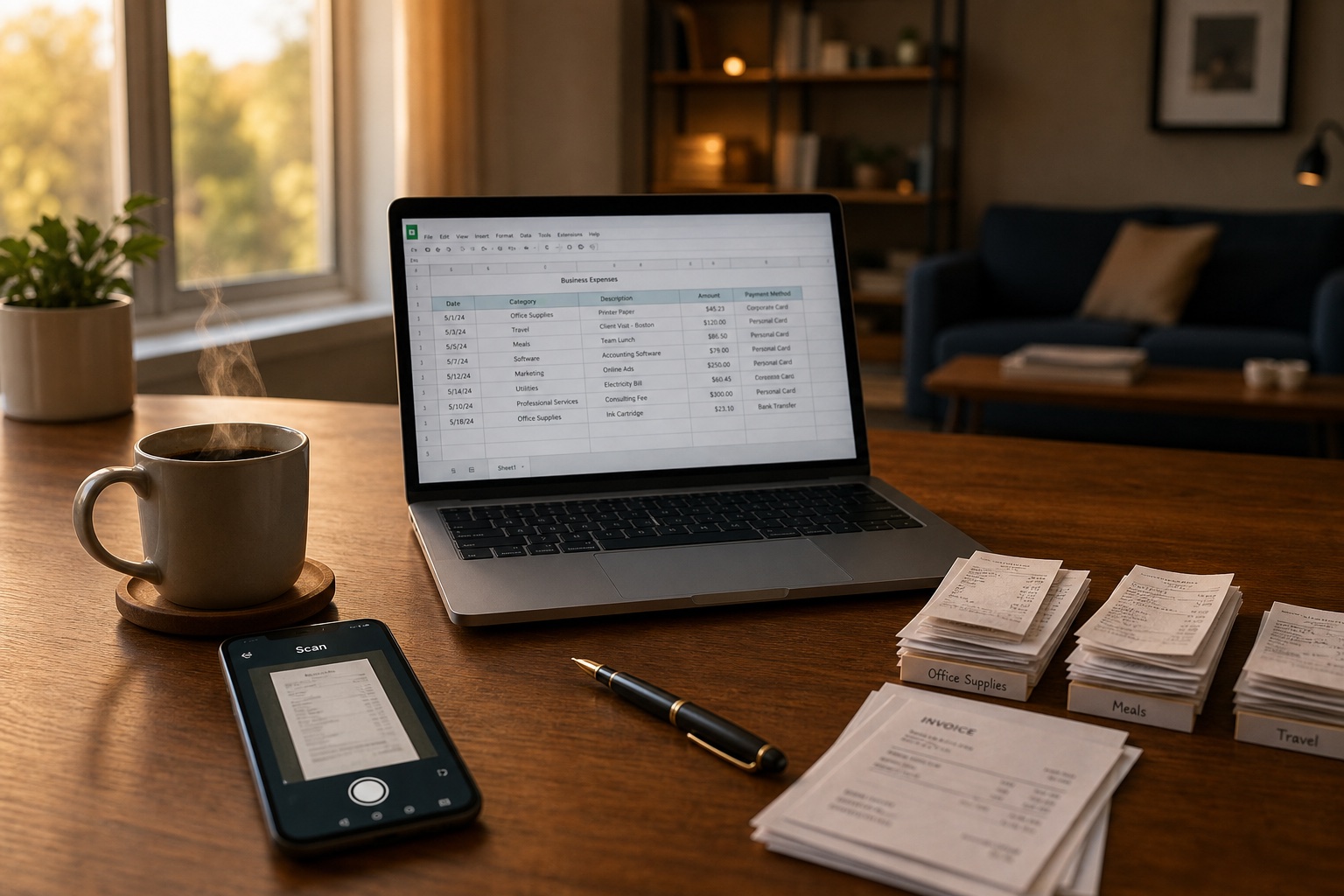
You sit down to do your tax return, open the software, and the first question stops you cold: which documents do I even need? You start hunting, find half of them, give up, and the whole thing slides another two weeks. The problem is almost never the filing itself. It is not knowing, up front, what to collect.
This is that list. A complete checklist of the documents a German tax return can require, sorted by Anlage (the annexes of the return), so you gather everything once and file in one sitting instead of five interrupted ones.
A note on scope: this checklist covers a personal income tax return (Einkommensteuererklärung) for employees and the common Multi-Hat case of a job plus a side income. Where the self-employed side differs, it is flagged. Not every line applies to everyone, treat it as a menu, not a mandate.
The short version: gather everything in five passes
- Income documents (10 min): your Lohnsteuerbescheinigung, plus any statements for side income, capital gains, or pensions.
- Work-related expenses (15 min): commute, work tools, training, application costs, home office.
- Insurance and provision (10 min): health, care, pension, liability and accident insurance statements.
- Special and extraordinary costs (15 min): donations, church tax, childcare, medical costs, household and craftsmen invoices.
- Side-income records, if any (varies): income and expense receipts for your EÜR.
Now the document-by-document checklist, organized so you can tick as you collect.
Income (the starting point)
- Lohnsteuerbescheinigung from your employer (the annual wage statement, usually arrives by end of February)
- Statements for unemployment, parental, or sick pay (Lohnersatzleistungen), which affect your rate
- Pension statements (Renten), if applicable
- Capital gains tax certificate (Steuerbescheinigung) from your bank, if you exceeded the Sparerpauschbetrag
- Records of any side income, rental income, or foreign income
Anlage N: work-related expenses (Werbungskosten)
Anything tied to earning your salary. This annex is where employees most often leave money behind.
- Commute: home and work addresses, one-way kilometers, number of working days
- Work equipment: laptop, desk, office chair, professional literature, software subscriptions
- Training, seminars, conferences: invoices plus travel costs
- Job application costs: postage, travel to interviews
- Home office: the flat-rate or proportional rent, electricity, internet
- Union or professional association fees
- Account maintenance fee on your salary account
Vorsorgeaufwand: insurance and provision
- Health insurance contributions (statutory or private)
- Long-term care insurance (Pflegeversicherung)
- Pension contributions: statutory, Riester, Rürup
- Disability insurance (Berufsunfähigkeit)
- Liability and accident insurance (Haftpflicht, Unfall)
Sonderausgaben: special expenses
- Donation receipts (Spendenbescheinigungen)
- Church tax (usually already on the Lohnsteuerbescheinigung)
- Childcare costs (Kinderbetreuung), invoices and proof of payment
- Private school tuition
Außergewöhnliche Belastungen: extraordinary burdens
- Prescription fees and co-payments
- Glasses, dental work, orthopedic aids
- Prescribed rehab or spa treatment
- Care costs for relatives
Haushaltsnahe Aufwendungen: household services and craftsmen
Real money hides here, and the rule that catches people: payment must be by bank transfer, cash does not count.
- Craftsmen invoices for work on your home (labor portion)
- Cleaning, gardening, winter service
- Chimney sweep, household help
- The matching bank transfer confirmations
If you have a side income: the EÜR documents
Running a Nebengewerbe or freelancing on the side adds a second pile, and mixing it with the private one is the most common mistake. Keep these separate:
- All outgoing invoices you issued
- All business expense receipts (tools, software, travel, supplies)
- Bank statements for the business account
- Mileage or vehicle logs, if relevant
The retention and GoBD rules for this side are stricter, covered in GoBD-compliant archiving.
Common mistakes
- Starting before you have collected. Opening the software first guarantees a stop-start filing. Gather, then file.
- Forgetting Lohnersatzleistungen. Parental or unemployment pay does not get taxed directly but raises your rate, and the tax office knows about it. Include the statement.
- Paying craftsmen in cash. No bank transfer, no deduction. This one alone costs people hundreds.
- Mixing private and business receipts. Two streams, two piles. Sort as you collect.
- Hunting for last year's documents in April. The fix is to file documents as they arrive, not once a year. More on that below.
How Paperarchive fits in
A checklist solves this year. The real fix is never being in the scramble again. Paperarchive captures each document the moment it arrives, reads it with OCR, tags it by type, and keeps it searchable, so when you sit down to file, "which documents do I need" becomes a search instead of a hunt. That is the idea behind organizing your tax documents continuously rather than once a year in a panic.
Next steps
- Sorting receipts for your German tax return
- How long to keep which documents
- GoBD-compliant archiving for the self-employed
Try Paperarchive for free and turn next year's document hunt into a two-minute search.
Related Articles
Sorting Receipts for Your German Tax Return 2026: How to Get It Done by July 31 Even Without Time
How to sort, scan, and submit receipts for your tax return in 60 minutes, even near the deadline. With a software comparison and tips for missing receipts.

How Long to Keep Documents in Germany? 2026 Guide
Which documents private individuals in Germany must keep, and for how long. Clear retention periods for 2026, plus what you can safely throw away.

Document Retention Periods in Germany
A practical overview of key retention periods for private households, self-employed people, and companies in Germany, plus tips for a stress-free archive.