How Long to Keep Documents in Germany? 2026 Guide

Sunday evening, 9:30 PM. Your tax return is due tomorrow. You have spent an hour searching for one attachment you received by email months ago. Your desk is full of paper, and your filing setup feels more like chaos than a system.
If this sounds familiar, you are not alone. Many people in Germany deal with unclear retention rules and no reliable process for daily life.
Here is the surprising part: as a private individual in Germany, you usually do not have broad legal document-retention obligations. Still, you should keep certain documents - not because every case is mandated by law, but because losing them can cost you money, legal rights, or significant stress.
Quick answer: four retention windows private individuals should know in 2026
If you only remember one thing, remember this:
- 2 years: handyman invoices related to buildings (legal duty under § 14b UStG)
- 3 years: practical minimum for disputes and many private claims
- 5 to 6 years: recommended window for tax-related private records
- Permanent: core life documents (employment records, pension records, property records)
Do private individuals in Germany have to keep documents?
Short answer: in most cases, no. Core retention rules in the German Fiscal Code (AO) and Commercial Code (HGB) apply primarily to businesses and self-employed professionals, not to private households.
The Munich Chamber of Industry and Commerce (IHK Munich) states this clearly in its retention guidance.
IHK guidance on retention periods
There is one clear legal obligation that directly affects private individuals: § 14b UStG.
If you also need business rules, read our overview for self-employed people and companies.
The one clear legal obligation: keeping handyman invoices for building-related work
If you commission construction or handyman work for your home or apartment, you must keep the invoice for two years. This is set out in Section 14b(1), sentence 5 of the German VAT Act (UStG).
Typical examples include painting, plumbing, electrical work, renovations, modernizations, garden and landscaping work, and repairs on heating, roof, or windows.
For major building projects, longer retention makes practical sense because warranty periods can run up to five years.
Tax documents: what private households should keep
Even without strict general legal obligations, tax-relevant records should be kept until your tax assessment is final, plus a safety buffer.
- proof of income-related expenses
- donation receipts
- documents for household services under § 35a EStG
- records of medical expenses and extraordinary burdens
- bank statements with tax-relevant transactions
Practical recommendation: keep private tax documents for at least five years.
Contracts, insurance, and key records
- Insurance contracts: while active plus two to three years after end
- Rental contracts: keep for at least two to three years after moving out
- Purchase contracts and warranty receipts: at least two years, often five years for major purchases
- Employment contracts and certificates: permanent retention recommended
Property records: this is where it gets serious
If you own real estate, retention strategy matters far more in practice. You may need records years later for defects, tax questions, or resale valuation.
- purchase contract and land register documents
- building records, plans, structural documentation
- renovation and modernization invoices
- energy certificate and maintenance protocols
Bank statements and financial documents
Banks must retain relevant records for long periods. The German Federal Ministry of Finance confirmed the 10-year retention framework for banks in 2025.
German Federal Ministry of Finance
For private individuals, practical retention periods are usually three to five years for tax matters and at least three years for disputes.
Quick overview table
| Document type | Recommended retention | Legal requirement? |
|---|---|---|
| Handyman invoice (building-related) | 2 years | Yes (§ 14b UStG) |
| House construction invoices | 5 years | Mandatory 2 years, longer recommended |
| Tax receipts | 5 years | No, strongly recommended |
| Donation receipts | 5 years | No, strongly recommended |
| Insurance contracts | Contract duration + 3 years | No |
| Rental contracts | Until move-out + 3 years | No |
| Purchase contracts | two to five years | No, needed for warranty |
| Employment contracts and certificates | Permanent | No, important for pension and applications |
| Property records | Permanent | No |
| Bank statements | three to five years | No |
2026 cleanup: what most private households can throw away now
- marketing leaflets and ad mail
- small retail receipts you would not bother to claim
- old shipping confirmations after claim windows are over
- daily purchase receipts without tax relevance
- delivery notes once invoice and goods are verified
FAQ: common questions from private households
How long should I keep tax documents as a private individual?
A practical retention period is at least five years. Even though there is no broad legal retention obligation for private individuals, this gives you a safety buffer for follow-up questions, corrections, and delayed reviews.
How long should I keep bank statements?
For private use, three to five years is a practical range. Keep longer if a loan, dispute, or major tax topic is still active.
Do I have to keep handyman invoices?
Yes, if the work is related to a building (home or apartment), you must keep the invoice for two years under § 14b UStG.
Can I throw away originals after scanning?
Often yes for everyday records, but keep originals for highly relevant documents such as key contracts, certificates, and certain property records.
Which documents should I keep permanently?
Keep employment and pension records, major property records, and core civil-status documents permanently.
Knowing the rules is not enough
Most people do not struggle because they do not know the rules. They struggle because paper and digital files stay disconnected, search is painful, and manual discipline breaks after a few weeks.
If you are mid-stress because the German tax deadline is closing in, read our companion piece on sorting receipts for the German tax return in 60 minutes for a concrete step-by-step approach.
And if you are starting from zero: on the basics page on organizing documents without folders I explain what to keep, how to find it again and how to start in five minutes.
A system that works in real life
A practical setup combines one intake flow with automation: scan, upload, or forward documents by email, then let categorization and OCR search handle the heavy lifting.
That is the core idea behind Paperarchive: automatic categorization, full-text OCR, and quick retrieval by sender, amount, date range, or content, with privacy-first hosting in Germany.
Want a quick sanity check? Take the quick document quiz and get an immediate assessment.
Related Articles
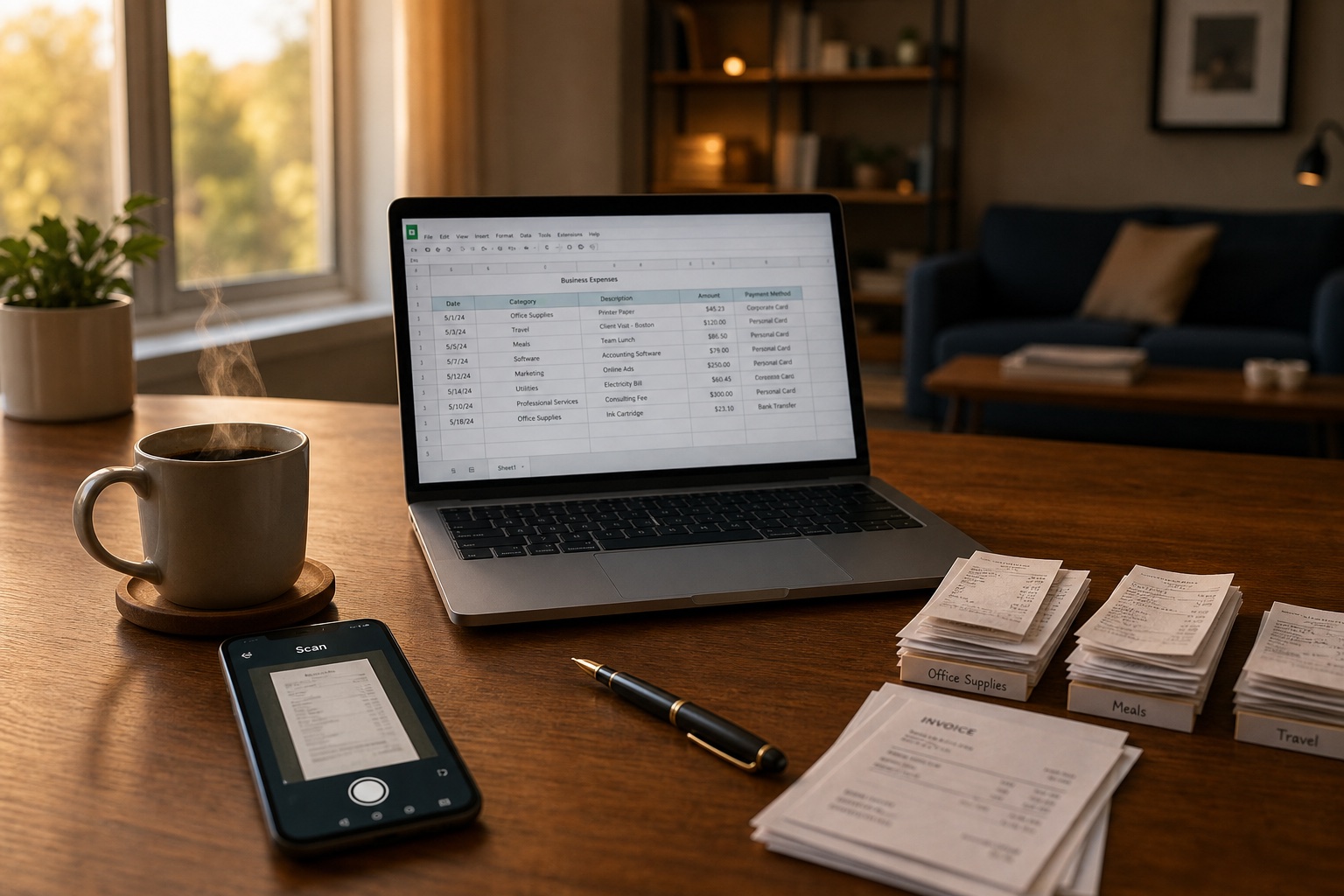
Sorting Receipts for Your German Tax Return 2026: How to Get It Done by July 31 Even Without Time
How to sort, scan, and submit receipts for your tax return in 60 minutes, even near the deadline. With a software comparison and tips for missing receipts.
Document Retention Periods in Germany
A practical overview of key retention periods for private households, self-employed people, and companies in Germany, plus tips for a stress-free archive.
GoBD-Compliant Archiving in Germany: Scan Receipts and Throw the Paper Away
What GoBD and 'ersetzendes Scannen' actually require, and how to digitize receipts so you can legally discard the originals. Plain language, no legalese.